Cars have changed a lot since the Nineties, let alone in the view that their invention at the end of the 19th century. The following 20+ important improvements in automobile engineering are no exception.
These improvements display us simply how far the era has come for the reason that the horseless carriage made its first appearance.
The subsequent listing is a long way from exhaustive and is in no unique order.
1. The steam engine kicked matters off:
 |
| Source: Stephen Foskett/Wikimedia Commons |

The steam engine changed into one of the first innovations in automobile engineering. Even though initially developed to pump water out of mines, upgrades through the years would considerably shrink the scale of the engine.
the primary reliable steam engine changed into developed by way of James Watt in 1775 and this changed into, in turn, a refinement of the earlier Newcomen engine.
Steam engines would begin with result in the development of locomotives and steam-powered ships, but the technology became delicate for use in early vehicles across the 1850s. Steam automobiles outnumbered different styles of propulsion among very early cars, and gas turned into pretty reasonably-priced as properly.
The destiny of the steam-engine vehicle become sealed while Henry Ford completely developed his mass manufacturing technique. Electric starters for inner combustion engines also removed the want for the hand-crank engine, and inner combustion engine-pushed automobiles might ultimately win out as they were a whole lot less expensive to buy.
2. The inner combustion engine made vehicles ‘cheap’:
 |
| source: Bru-nO/Pixabay |
The internal combustion engine is, by way of any standards, the de facto reason for the lifestyles of the car these days. Even though diverse examples of early engines were round for the reason that 1700s, it took Etienne Lenior to supply the primary dependable one, in 1859.
The modern-day internal combustion engine as we are aware of it became evolved while Nikolaus Otto patented his "atmospheric fuel engine" in 1864. Later trends had been made employing George Brayton (the primary liquid-gasoline engine) and collaboration among Otto, Daimler, and Maybach gave the world the first four-cycle engine in 1876.
The 2-stroke engine was developed with the aid of Karl Benz a touch later, in 1879, and the production of Benz's first business motor automobiles started in 1886.
3. The starter rendered hand cranks obsolete:
Internal combustion engines basically paintings on a comments system that is predicated on inertia from each cycle to initiate the following. For this reason, early vehicles needed a manner to rotate (crank) the engine initially, to permit it to run on its strength.
Early engines used a variety of strategies to acquire this, from gunpowder cylinders to springs, to brute force - using the iconic crank manage. Although powerful, these techniques had been inconvenient, hard, and will also be risky. Engines might regularly 'kickback' making the method became less than predictable.
What became wished was a less exhausting, greater convenient, and predictable method of beginning the engine.
The first electric-powered starter became developed in England in 1896 employing H. J. Dowsing. The first U.S. patent for an electric-powered starter turned into granted in 1903, with a patent for an improved model in 1911. The first automobiles to have electrical starters mounted have been industrially produced through Cadillac in 1912.
Starter vehicles are of the route now preferred in cars, however, their upward push changed into now not guaranteed, and cranks have been nevertheless in use well into the 1920s. Interestingly, hand cranks were nevertheless supplied by using a few manufacturers as late because of the production of vehicles like the Citroen 2CV (1948-1990). They were provided as a manner to start the auto in case the starter or battery failed.
4. The diesel engine is pretty efficient
The diesel engine, or compression-ignition (CI) engine, was advanced by using Rudolf Diesel and is still nowadays the very best thermal performance of any realistic inner combustion engine. In a few cases, low-pace diesel engines will have a thermal performance of just over 50%.
because the call shows, the ignition of the fuel is achieved by way of mechanical compression of the air within the combustion chamber, to the sort of degree that injected atomized diesel ignites at once (adiabatic compression). This contrasts with the spark-ignition of petrol or gasoline engines.
Rudolf Diesel, after nearly being killed through an in advanced ammonia vapor fueled steam engine, determined to base his new engine at the Carnot Cycle as an alternative. Quickly after Karl Benz become awarded his patent in 1893, Diesel posted his groundbreaking treatise "concept and production of a Rational heat-engine to Replace the Steam Engine and The Combustion Engines recognized today".
The diesel engine turned into born.
5. Anti-lock Brakes Have Helped to keep Lives
 |
| source: Pixabay |
Anti-lock brakes, or anti-skid braking systems (ABS), are quite antique piece of vehicle engineering. Even though current systems had been brought in the Fifties aero-industry and became popular in cars from the 1970s onwards, the idea virtually dates from as early as 1908.
Present-day structures permit the car to hold tractive contact with the road for the duration of braking, for this reason stopping the wheels from locking or ceasing to rotate and therefore causing the automobile to skid. The system is automated and takes gain of the standards of threshold and cadence braking practiced via skilled drivers using the previous era of braking structures.
The first patented 'ABS' changed into evolved by German engineer Karl Wessel in 1928 - however, he might by no means increase a working product. At some stage in the Nineteen Fifties, the generation began to take shape, with Dunlop Maxaret's anti-skid machine, which was used notably on UK jet aircraft like the Avro Vulcan and English electric-powered Lightning.
A surely cutting-edge gadget become added through Chrysler and became a computerized, three-channel, four-sensor all-wheel ABS. It became referred to as "certain Brake" and came as popular on their 1971 Imperial. Different automobile producers observed suit over the subsequent many years, and ABS became delivered on motorcycles inside the Nineteen Nineties.
6. Automated transmission made riding easier
 |
| source: Ritchyblack/Wikimedia Commons |

Computerized transmission, automobile, or self-moving transmission is another outstanding innovation in car engineering. The automatic device frees the driver from the want to exchange tools ratios manually as the automobile is at the circulate.
Even though less responsive and greater liable to faults than manual transmissions, this innovation reduced the variety of elements that a driving force wishes to govern use so one can power. This has apparent advantages for individuals with disabilities and additionally, makes motors less difficult to force universal.
The automated transmission changed at the start evolved in 1921 by Alfred Horner Munro, a Canadian. He patented his layout in 1923 and bought United Kingdom and US patents in 1924 and 1927, respectively.
Munro turned into really a steam engineer, and his early layout used compressed air rather than hydraulic fluid, as utilized by modern-day structures. Unluckily, he never located commercial software. Two Brazilian engineers, José Braz Araripe and Fernando Lely Lemos advanced a hydraulic fluid model in 1932 and offered their design to widespread motors in 1940.
7. Electricity steerage made using more gratifying
 |
| source: OSX/Wikimedia Commons |
_Limited_4WD_wagon_(2011-03-31).jpg)
Energy steerage, or electricity-assisted steering (PAS), is another superb innovation in vehicle engineering and facilitates drivers to steer their automobiles more easily. The use of hydraulic or electric actuators permits drivers to exert an awful lot less effort when turning the steering wheel than in now not PAS fitted automobiles, particularly at low speeds or whilst desk-bound.
Early variations of power steering have been patented in 1876, 1902, and 1904, however, none of these made it into manufacturing. The first practical system become devised in 1926 by way of Francis W. Davis. He later moved to well-known motors and besides refined his designs.
Chrysler organization became the first to make energy steerage commercially to be had in a passenger automobile, incorporating the technology into their 1951 Imperial. GM speedy accompanied healthy with their 1952 Cadillac.
Nowadays, most vehicles include power steering as standard.
8. Airbags: saving lives with the energy of air
After the seatbelt, airbags are one of the most vital improvements in car safety and vehicle engineering. They’re designed to inflate extraordinarily quickly at some point of collisions, affects, or unexpected speedy deceleration and deflate similarly as rapid.
This generation has saved thousands of lives because of its mass adoption within the vehicle industry.
Airbags can trace their origin to air-crammed bladders used as early as the Fifties. Their invention is broadly credited to John W. Hetrick, who registered his patent in 1951. A comparable gadget changed into additionally patented in Germany by using Walter Linderer at approximately the identical time. Each structure used compressed air that was precipitated the usage of a spring, bumper contact, or manually by the driving force.
It might take the improvement of crash sensors within the 1960s for the technology to turn out to be broadly followed. Mercedes-Benz, GM, Ford, and Chrysler could encompass them of their automobiles from the Nineteen Seventies, but they would not emerge as popular until the 1990s.
9. Electric powered automobile engines are a thing of the past and future
 |
| source: Henrysirhenry/Wikimedia Commons |

Electric car engines were around for a good deal longer than you might assume. Even though hybrid or all-electric powered cars are used in big numbers, the first sensible production electric powered automobile appeared in London in 1884.
Every other layout, The Flocken Elektrowagen, was mass-produced in Germany in 1888. Vehicles powered through electric powered engines, alongside the ones powered through steam, actually outsold cars powered by way of internal combustion engines within the early years of the automobile age, as a minimum before the arrival of the electrical starter engine.
The early electrical cars had been popular in the past due 1800s and early 1900s, as they offered a level of consolation and simplicity of use no longer finished by using rival technologies on the time. It’s far expected that around 30,000 such vehicles have been mass-produced by way of the flip of the twentieth century.
The internal combustion engine might in the long run win out, shunting electric automobiles into the shadows till their renaissance inside the past due 20th century.
10. GPS - U.S. army tech getting you from A to B
 |
| source: Pixaby |
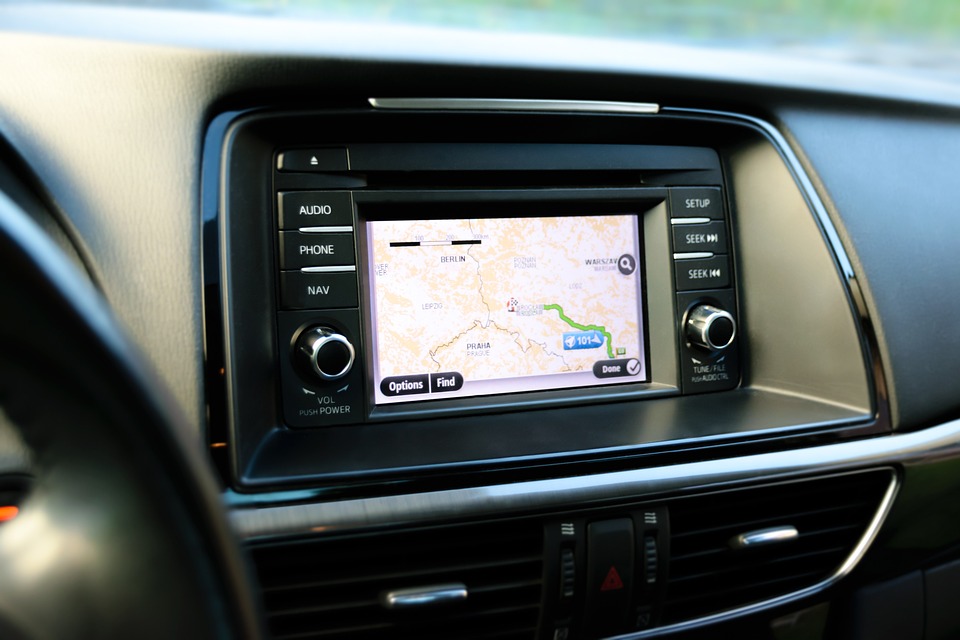
The GPS, or worldwide Positioning system, was changed at first developed by American authorities for use via the armed forces. The U.S. branch of protection (DoD) decided to use satellites to support a brand new navigation device. The first Navigation device with Timing and varying (NAVSTAR) satellite tv for pc became launched in 1978.
The primary GPS device used 24 satellites and became fully operational in 1995. Credit score for its introduction is often given to Roger L. Easton, Ivan A. Getting, and Bradford Parkinson.
Civilian use of the machine became allowed from as early because the Nineteen Eighties and today the GPS constellation consists of 31 satellites and GPS structures which have considering become included into many cutting-edge technologies, from smartphones to vehicles, and feature revolutionized the way we all navigate.
11. Catalytic converter: enhancing air excellent for the reason that Seventies
 |
| source: Hermann Luyken/Wikimedia Commons |
The catalytic converter is one of the most crucial vehicle engineering innovations of all time. Its ability to convert poisonous gases and different pollutants into much less-risky paperwork has improved the air excellent of our cities notably.
The fundamental concept is that exhaust gases are exceeded thru the converter, catalyzing them into less-poisonous paperwork in a redox response. The converters have ended up a criminal requirement on diesel and gas engines, but also can be suited for lean-burn engines, as well as kerosene warmers and stoves.
Catalytic converters were the brainchild of Eugene Houdry, a French engineer, who'd moved to the U.S. in 1930. He was taken aback with the aid of the extent of smog and pollution in l. a. when he arrived and determined to attempt to solve the problem. With the aid of the mid-1950s, he has been granted a patent for his generation.
It took stricter environmental rules around the arena for the mass adoption of catalytic converters in automobiles. The first manufacturing converter, and development on Houdry's layout, was mass-produced in 1973. They were first delivered on automobiles inside the U.S. from 1975, to comply with the EPA's stricter policies on exhaust emissions.
12. Saving lives with the 3-factor seat belt
 |
| source: State Farm/Wikimedia Commons |
The now-ubiquitous three-factor seatbelt is designed to spread the rapid deceleration electricity from a collision over the chest, pelvis, and shoulders of the wearer. It changed into first delivered employing Volvo in 1959 and was evolved by way of Nils Bohlin, who had previously labored for SAAB growing ejection seats.
Before this innovation, the two-point seat belt becomes the standard. Those strapped across the frame, with a buckle placed over the abdomen. Those were acknowledged to reason critical internal injuries during excessive-velocity crashes.
This super innovation in vehicle engineering first seemed within the Volvo PV 544 but has become general in the 1959 Volvo 122. Volvo could later make the patent for the tool open-supply, inside the interest of protection for most people and the industry at big.
In line with the U.S. country-wide highway site visitors protection administration, those belts shop around eleven, 000 lives each year.
13. Improved gas efficiency with the hybridized drivetrain
 |
| source: Mariordo/Wikimedia Commons |

Whilst Toyota launched the primary Prius on the market to the public in 1998, few would admire the impact it would in the end have on the auto industry. This vehicle included a hybrid, electric-fuel drivetrain that dramatically progressed gasoline efficiency and decreased emissions, forcing different car manufacturers to comply with the shape.
The Prius was the first 759af83dbac04511979469e6f58100a3 hybrid. It came with a small 1.5-liter gas engine, electric powered motor, and nickel-steel hydride battery. Although uptake becomes slow in the beginning, nowadays maximum car manufacturers have a few forms of hybrid car in their catalog. In many elements of the world, they may be changing solely gas-powered cars, which might be being phased out.
14. Stability manage Helped forestall Skids
ESC or digital balance manipulate allows correctly a skid if a car begins to slip. It’s far, in impact, development inside the anti-lock brake structures that preceded it. ESC produces a marked development in car safety, specifically during emergencies.
As ESC yaw sensors locate a slide, the gadget applies the brakes to character wheels to assist correct the skid and straighten the auto. Some ESC systems additionally take control of the throttle to manage the strength of every wheel as well.
Mercedes-Benz and BMW added ESC to their luxury automobile marketplace inside the mid-Nineties. Since 2011, ESC has become a criminal requirement in passenger automobiles in many nations.
15. Onboard diagnostics II (OBD II) improved engine management
 |
| source: Conrad |
Onboard diagnostics II, OBD II for brief, become the natural development from the primary onboard diagnostics systems advanced within the Nineteen Eighties.
Its creation furnished both home mechanics and professional technicians a way of extra without problems figuring out what exactly is incorrect with a car thru a chain of codes.
OBD II also allowed for a notably extra sophisticated method of controlling the engine, improve fuel performance, etc.
Even though it became, to begin with, hated by using car lovers and mechanics, the system has sparked a brand new industry of experiment tools and different aftermarket devices, ranging from gas financial system meters to engine overall performance tuners.
16. twin-snatch transmission made gear shifts seamless
 |
| source: Matti Blume/Wikimedia Commons |

Twin-grab Transmission (DCT) lets in for a motive force to rapidly transfer between gears, giving stronger and seamless speed in comparison to extra traditional transmissions. It has resulted in a transmission this is as easy to apply as an automatic transmission, and as responsive as a guide transmission.
On a standard, six-speed DCT gearbox, one take hold of will manage strange gears while the other will shifts even gears. Tools changes are managed through a chain of computer systems.
The concept was, to begin with, devised with the aid of a Frenchman, Adolphe Kegresse, before WWII, however, he by no means made an operating model.
DCT becomes first brought in racing vehicles within the Nineteen Eighties and became first brought to most of the people by way of Volkswagen. Their first twin-clutch transmission, DSG, was released in 2003.
It has in view that come to be extensively available in lots of other automobile manufacturers, inclusive of Lamborgini and Mercedes-Benz.
17. Clever key (fob): convenient engine ignition
 |
| source: ScrewsHirsch/Wikimedia Commons |

The traditional steel key's speedy turning into a residing fossil in the auto enterprise. Clever keys are the brand new preferred, permitting engine ignition with the click of a button in preference to the turning of a key.
A few even begin the automobile you as your technique. Those have been once just a novelty, with a few early designs reminiscent of a credit card. The fobs are a concept to make automobiles tougher to thieve, although they could leave automobiles open to automobile hacking.
18. Turbochargers growth power and fuel performance
 |
| source: NASA/Wikimedia Commons |

Turbochargers, or turbos, had been utilized in production automobiles for the reason that Nineteen Sixties. They’re efficiently a compressor this is pushed by using the vehicles' exhaust gasses and force more air into the engine's cylinders.
Extra air ends in more strength and might make a smaller engine carry out outside of its elegance. They’re typically used with Otto and Diesel cycle engines.
The technology was invented by using Swiss engineer Alfred Buchi who received a patent for it in 1905. The technology might initially find applications in aircraft engines, mainly for the duration of WWII.
Nowadays, car producers are usually running to downsize their engines whilst along with turbocharged alternatives. This simultaneously boosts overall performance and will increase fuel performance.
19. Flashing turn signals allow other drivers to recognize your intentions
Every other minor, yet important, vehicle engineering innovation is the flashing flip sign (indicator). Early bureaucracy date to 1907, however, the version patented in 1938 is the one now used widely and is typically required on all street-criminal cars.
Those indicators are required to blink on and off at a price between 60 and 120 "blinks consistently with minute". Older fashions used a thermal interrupter transfer to offer the 'blink' but these have been replaced with transistor circuits.
20. Cruise management paved the manner for driverless vehicles
 |
| source: Santeri Viinamäki/Wikimedia Commons |

Cruise control becomes first advanced via Ralph Teeter within the Nineteen Forties. He developed the generation in reaction to his perception that choppy speeds triggered accidents.
Teeter evolved a servomechanism to help preserve the auto's speed via taking manage of the throttle from the motive force. Even though unpopular whilst first introduced in the 1950s, it now comes as popular in lots of vehicles today.
The addition of radar to cruise control in the early 2000s has taken the generation to the subsequent degree. It has additionally paved the way for the appearance of driverless cars.
21. The blindspot reflection helped drivers spot each different effectively
 |
| source: Josh Ferris/Flickr |
Blindspot mirrors, because the call indicates, are mirrors that might be in particular designed to help the driving force see areas around their car which are generally obscured from view. Usually connected to a vehicle's side-view or wing mirrors, these simple devices helped make riding a lot more secure.
But, improvements in the replicate era may additionally render them obsolete in the now not-too-distant future.
Interestingly, side view mirrors in and of themselves best commenced to appear inside the Nineteen Sixties. Before this many roads have been unpaved and most effectively had two lanes (one in every direction). Drivers handiest certainly had to be involved with the goings-on without delay in front and at the back of their cars.
22. The pneumatic tire become modern
 |
| source: Geni/Wikimedia Commons |

Yet some other superb innovation in vehicle engineering was the development of the pneumatic tire. In its best shape, this consists of an easy donut of rubber filled with compressed air that provides an extra comfy and effective manner of absorbing shock and wearing loads.
The primarily recorded patent for the era turned into filed with the aid of Robert William Thomson in 1845, in England. His design consisted of a whole leather tire packed with, yes you've got guessed it, air. Referred to as "aerial wheels", they proved to be much less popular than Thomson's solid rubber tires of the identical length.
With the rise in reputation of the bicycle inside the past due-1800s, interest in pneumatic tires changed into reignited. And so, in 1888, John Boyd Dunlop, a veterinary surgeon from Belfast, Northern Eire, received patents for his bicycle pneumatic tires.
For motors, the primary pneumatic tires had been first developed employing the French rubber producer Michelin & Cie.
23. LED headlamps have been also an interesting development
 |
| source: Kickaffe/Wikimedia Commons |

LED headlamps are yet another essential innovation in automobile engineering. They first started to seem in around 2004, and feature long gone from power to strength ever when you consider that.
In contrast to their predecessors, LED headlamps to tend to have longer lifespans and devour much less energy compared to halogen, tungsten, and high-depth discharge options. They can offer big other advantages, too, including decrease preservation expenses and improved visibility.
From around 2006, the primary series-production LED low beams began to be factory-hooked up in vehicles just like the Lexus LS 600h. The following year, the primary headlamps to apply LEDs for all functions have been introduced on the V10 Audi R8 sports automobile.
24. The rearview backup digicam helps save you injuries
 |
| source: Altair78/Wikimedia Commons |

The rearview backup digicam, additionally called a reversing camera or honestly rear-view digicam, has made reversing your vehicle a lot safer and more convenient.
Mainly designed to keep away from collisions even as reversing, these video cameras and onboard display screen setups successfully remove rear blind spots for the driving force. However, they're now not an innovation.
A number of the first backup/reversing camera structures were used in a 1956 Buick Centurion concept car. Including a rear-mounted television digital camera, it sent photos to a television display located inside the dashboard in the area of a regular rear-view reflect.
One of the first manufacturing automobiles to feature this era became the Toyota Soarer limited UZZ31 and UZZ32, which become best to be had in Japan in the early-Nineteen Nineties.
Aftermarket alternatives for motors were to be had for a while, however many manufacturing vehicles nowadays come with them fitted as general. Some international locations, together with the U.S. and Canada, now mandate that all new production automobiles ought to have them outfitted by way of regulation.
25. Collision avoidance technology is another good-sized advancement
 |
| source: NTSB/Twitter |
But any other important innovation within the automobile industry is collision avoidance technology or systems (CAS). Additionally called driving force assistance systems, this generation helps to prevent human errors in collisions to prevent or reduce their severity as a lot as fairly practicable.
Present-day structures tend to have several talents, from simple warnings to the motive force, to complete independent takeover of the vehicle's structures to avoid or mitigate an imminent coincidence.
In their maximum simple shape, CAS' consist of a head-collision systems which reveal an automobile's velocity and the rate of the automobile in front of it (if any). The gadget constantly monitors the distance between the two cars and presents a warning if the driving force, within the gadget's view, is getting too close.
In many nations nowadays, new cars ought to come with self-sustaining emergency braking systems to prevent potentially severe crashes. Other systems may additionally function as a lane departure warning system to warn the driver if they start to stray out of their lane.
26. Linked mobile apps in cars are being advanced in earnest
 |
| source: pxfuel |
The increase of the internet of factors (IoT) has also reached the car industry. One location is the recent explosion in linked mobile apps specifically tailor-made for use with automobiles.
Having the ability to partly interface your cell tool with your automobile has been around for a while, like Bluetooth connectivity, however, there may be a real push to develop API's to connect many other apps in your telephone to your car. Today, many automakers are operating carefully with numerous app developers to make this a fact.
From infotainment to onboard automobile diagnostics, this place is predicted to see big growth over the following few years, consistent with charge Waterhouse Cooper.
27. Car monitoring software program, far-flung automobile shutdown, and sentry mode are revolutionizing the car industry
Any other vital innovation in the automobile era is the advent of automobile monitoring software programs and far-off automobile shut down and/or sentry mode. some brands, like Tesla, offer this as well-known with their variety of cars, whilst aftermarket/0.33-birthday celebration alternatives also are extensive to be had for lots exceptional vehicles.
With the usage of a mixture of GPS and IoT, the latest automobile proprietors have quite several guns at their disposal to counter automobile theft. Even as there are a few critical protection risks with those forms of innovations, many trusts the professionals outweigh the cons.
28. Regenerative braking is yet any other large vehicle business innovation
 |
| source: Geni/Wikimedia Commons |

Some other big innovation within the vehicle enterprise is regenerative braking. An energy recuperation mechanism, regenerative braking slows down a vehicle with the aid of changing a number of its kinetic energy into a form that may be both be used at once or saved till wanted.
These structures generally consist of an electric traction motor that makes use of the vehicle's momentum to recover electricity that could otherwise be lost as warmness. Such systems not most effective improve the general strength efficiency of the automobile however also increase the existence of the braking gadget due to the decreased put on at the braking system's mechanical parts.
The generation has its origins within the overdue 1800s and began to appear on trains as early as the 1930s. These days, many automakers, together with Toyota, Peugeot, BMW, and Volkswagen, have all started to consist of them as trendy, considerably in VW's BlueMotion series of motors.
29. BladeScan era could be the destiny of automobile headlights
 |
| source: Lexus |
Currently, an alternative most effective on new Lexus', BladeScan technology is shaping as much as be another crucial innovation for the automobile enterprise. Building on their knowledge in LED headlights and adaptive high-beam headlights, Lexus is now rolling out their next automotive lighting fixtures pioneering paintings.
"BladeScan generation... offers greater precise photometric control of the vicinity of illumination in front of the car, being accurate to within zero.7 ranges.
It additionally offers a broader distribution of light to brighten areas that might not commonly be illuminated with a conventional excessive-beam device." - Lexus.
30. ClearSight ground view and rearview mirrors
 |
| source: Jaguar Land Rover |
And finally, Jaguar Land Rover's ClearSight floor and rearview reflect generation is every other doubtlessly revolutionary innovation in vehicle safety. Using an aggregate of cameras and a rearview reflect-included show, these devices offer the driving force with unprecedented views at strategic points around the automobile.
It became first unveiled through Land Rover at the February 2019 Chicago vehicle show and is now to be had of their 2020 range of Rover Evoque.
"The Land Rover ClearSight rear-view mirror makes use of a rear-set up digital camera to display a huge-perspective digital camera view of what’s behind your automobile proper for your rear-view mirror. So even when you have tall human beings sitting in the again seat or your shipment place is piled excessive with tenting gadget, furniture, or moving packing containers, you’ll have no troubles backing up." - Land Rover.
So there you pass - 20+ of the best innovations and inventions in car engineering. Have we ignored any large ones? Sense unfastened to feature your suggestions beneath